Increasing secondary spending has become a crucial priority for parks seeking to strengthen revenue streams beyond ticket sales. As capital investment grows and guest expectations evolve, operators are compelled to design multilayered strategies that stimulate discretionary consumption throughout the visitor journey. Secondary spending is no longer an incidental outcome; it is a meticulously engineered process supported by behavioral insight, operational design, and product curation. The following analysis outlines practical, scalable, and data-driven approaches for elevating ancillary revenue in contemporary amusement environments.
Understanding the Dynamics of Secondary Spending
Secondary spending refers to all non-admission revenue generated during a guest’s stay, including food and beverage, souvenirs, premium experiences, and ride-related upgrades. The ecosystem supporting these transactions must be cohesive. A giant pendulum ride, for instance, is not merely a thrill attraction; it becomes a commercial catalyst when paired with thematic retail, photography stations, and immersive queue zones that encourage impulse purchasing. The interplay between attraction design and retail strategy often defines the overall performance of secondary revenue.
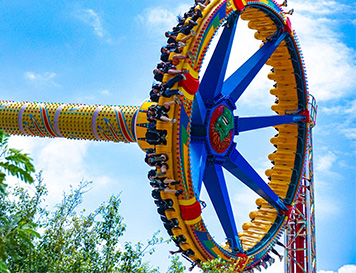 Amusement park equipment manufacturers have also begun integrating modular infrastructure that supports retail and F&B expansion. These capabilities enable operators to capture spending at moments of peak emotional engagement, such as post-ride exhilaration or pre-ride anticipation.
Designing Multi-Touchpoint Revenue Opportunities
1. Transforming Queue Lines into Retail-Ready Environments
Queue lines can evolve into transactional spaces without compromising throughput. Interactive displays, localized storytelling, digital photo previews, and collectible vending provide low-friction opportunities for purchase. When guests are captivated and stationary, they are more receptive to micro-consumption.
Short queues may appear desirable, yet longer dwell times—when enriched with thoughtful design—can drive incremental revenue. Deploying character-themed merchandise, ride-specific memorabilia, and seasonal exclusives within queue zones fosters a sense of scarcity and urgency.
2. Elevating Post-Ride Emotion into Immediate Purchase Intent
Guest emotions peak immediately after completing a high-adrenaline attraction such as a giant pendulum ride. This window is ideal for conversion.
Positioning retail kiosks and digital photo redemption areas along the exit corridor capitalizes on the heightened arousal state. A precisely timed layout—exit path → photo preview → merchandise offer—substantially increases conversion probability. Operators may further amplify this by offering limited-edition ride tokens or bundled packages such as “ride photo + collectible badge.”
Amusement park equipment manufacturers increasingly design attractions with optimized exit flows, knowing that retail positioning can materially influence guest behavior.

3. Themed Retail Integration
Themed retail linked directly to ride narratives transforms merchandise from commodity items into emotional souvenirs. A cohesive brand universe surrounding a signature attraction encourages guests to “take a piece of the story home.”
This is especially effective when:
- The attraction has a strong visual identity
- Merchandise reflects specific ride elements
- Items are available only at that location
Such hyper-localized retail often outperforms generic offerings due to its exclusivity and perceived emotional value.
Food & Beverage Strategies That Stimulate Repeat Purchases
1. Mobile Ordering and Impulse-Driven Placement
Modern guests prefer convenience. Mobile ordering kiosks, QR-based menus, and app-integrated delivery points reduce friction while increasing average transaction value. When strategically positioned near major attractions, food outlets capture hunger as an impulse rather than a planned stop.
2. Signature and Limited-Time Menu Items
Exclusive food offerings tied to seasonal events or new attractions amplify visitor excitement. Guests are more likely to spend when a product is framed as rare or time-restricted. This strategy leverages psychological scarcity to enhance desirability.
3. Edutainment-Based F&B Concepts
Interactive snack stations, such as “make your own dessert” counters or open-kitchen formats, introduce experiential value that justifies higher price points. The fusion of entertainment with food transforms a commodity into an attraction.
Leveraging Technology for Higher Guest Conversion
1. Data-Driven Dynamic Pricing
Digital ticketing systems allow parks to adjust pricing for premium experiences, express passes, or ride upgrades based on demand. Dynamic pricing creates additional revenue while balancing operational capacity.
2. Cashless Ecosystems and Prepaid Credit
Cashless wristbands, smart cards, and app-linked accounts increase spending frequency by eliminating payment barriers. Preloaded credits, especially when bundled with tickets, often result in unspent balances—or additional discretionary purchases.
3. Photo and Video Personalization
Automated on-ride cameras now integrate with cloud platforms, enabling instant downloads, personalized video edits, and collectible digital content. Guests value convenience; digital delivery increases conversion compared to traditional printed photos.
Amusement park equipment manufacturers increasingly incorporate integrated media systems that allow seamless capture and distribution, transforming ride media into a major revenue pillar.
Creating Premium Experiences That Encourage High-Margin Consumption
1. VIP Zones and Priority Access
Charging for shaded seating, dedicated viewing areas, or fast-track access creates premium revenue opportunities. These offerings require minimal operational overhead yet generate substantial financial return.
2. Behind-the-Scenes Tours
Guests often enjoy learning about ride mechanics, maintenance practices, and design concepts. Tours anchored around high-profile attractions—like the engineering behind a giant pendulum ride—command strong interest and higher price points.
3. Exclusive Character or Mascot Interactions
Photo sessions, autograph moments, and mini-performances cultivate emotional connections. These events often drive merchandise sales, particularly when tied to collectible items available only during the encounter.
Storytelling as a Revenue Multiplier
Narrative-driven environments encourage deeper guest engagement. When attractions embody strong storytelling, visitors are more willing to purchase related products. Story-based merchandising also supports cross-promotion: a narrative introduced in one area can be expanded through apparel, collectibles, food products, and interactive experiences.
For instance, a themed zone anchored by a giant pendulum ride could extend its storyline across retail, dining, and entertainment. The more cohesive the story, the more naturally guests participate in secondary consumption.
Strategic Placement and Flow Optimization
Revenue is often determined by the physical layout of the park. Operators analyzing heat maps, guest movement patterns, and dwell times can position retail nodes at high-traffic intersections or transitional pathways.
Flow-optimized design includes:
- Merchandise carts along popular walking loops
- Pop-up stalls near parade routes
- Snack stations at natural rest points
- Retail positioned at attraction exits
When the environment gently guides guests toward consumption opportunities, secondary spending increases without aggressive sales tactics.
Final Thoughts
Increasing secondary spending is not an isolated tactic—it is an integrated strategy combining visitor psychology, operational engineering, thematic design, and retail innovation. By synchronizing these elements, parks can significantly elevate their financial performance without compromising guest satisfaction. Whether through experiential food concepts, narrative-driven merchandise, or technology-enabled convenience systems, the most successful operators treat secondary spending as an essential narrative thread woven throughout the entire guest journey.

Comments
No comments yet. Be the first to react!