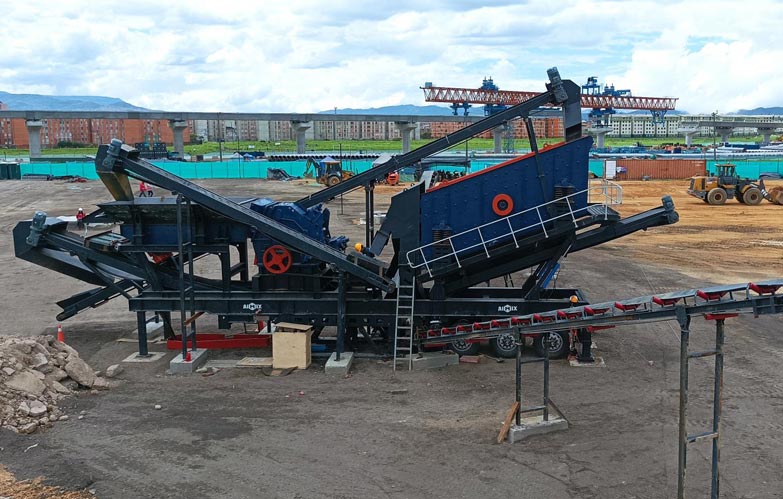
In the competitive world of aggregate production, time is the most valuable currency. For operators utilizing a mobile stone crusher plant, the primary advantage is the ability to process material rapidly at the source, reducing haulage costs and increasing site flexibility. However, this high-efficiency model relies heavily on the continuous movement of the production line. When a critical component in an aggregate crusher plant fails, the financial repercussions extend far beyond the cost of a replacement part. Every hour that an impact crusher sits idle represents a direct hit to the bottom line, affecting labor costs, delivery schedules, and overall market reputation. Understanding the true cost of downtime is the first step toward building a more resilient and profitable crushing operation.
The Hidden Costs of Equipment Interruption
Downtime is often categorized into two types: planned and unplanned. While planned maintenance is a necessary investment, unplanned outages in a mobile stone crusher plant(planta trituradora móvil) can be catastrophic. The most immediate impact is the loss of production volume. If your facility is rated for 200 tons per hour, a single day of downtime results in over 1,600 tons of lost revenue.
Furthermore, the fixed costs of the operation do not stop when the machines do. Salaries for operators, site security, and lease payments for the aggregate crusher plant continue to accumulate. When an impact crusher stops due to a mechanical failure, the cost per ton produced during that month spikes significantly, as the overhead must be distributed across a smaller volume of sellable material.
Mechanical Vulnerabilities and Prevention Strategies
Maintaining a mobile stone crusher plant requires a proactive approach to mechanical health. Because these units are integrated systems, a failure in one area often causes a bottleneck that halts the entire circuit.
Protecting the Heart of the Circuit
The impact crusher is frequently the component subject to the highest levels of stress. Its high-speed rotors and blow bars are designed to handle abrasive rock, but they are not invincible. If the wear liners are not monitored, the efficiency of the aggregate crusher plant(planta trituradora de agregados) will drop, leading to higher energy consumption and lower product quality even before a total breakdown occurs. Regular inspections of the impact crusher can prevent these "silent" profit drains.
Logistics and Spare Parts Availability
A common cause of extended downtime for a mobile stone crusher plant is the lack of localized spare parts. If a critical bearing or hydraulic hose fails and the part must be shipped from overseas, the aggregate crusher plant could be offline for weeks. Smart operators maintain a stock of "critical wear parts" on-site. Knowing which components in your impact crusher are most likely to fail based on the hardness of your raw material allows you to turn a potential two-week disaster into a four-hour repair.
The Ripple Effect on Customer Relationships
Profitability in the aggregate industry is built on reliability. Construction projects operate on tight schedules, and a delay in receiving road base or concrete stone can shut down a multi-million dollar jobsite.
If your mobile stone crusher plant experiences frequent unplanned downtime, your customers will eventually seek more reliable suppliers. The long-term impact on profits is the loss of high-value contracts. An aggregate crusher plant that cannot guarantee delivery dates is often forced to compete on price alone, further eroding profit margins. Investing in a high-quality impact crusher(trituradora de impacto) and a rigorous maintenance schedule is, therefore, a marketing strategy as much as a technical one.
Data-Driven Maintenance for Maximum Uptime
In the modern era, "guessing" when a machine might fail is no longer acceptable. Leading producers are now using telematics and remote monitoring to track the performance of their mobile stone crusher plant in real-time.
By analyzing vibration data and temperature spikes in the aggregate crusher plant, managers can predict failures before they happen. For example, if the sensors on an impact crusher indicate an unusual heat signature in the bearings, maintenance can be scheduled during a natural shift break. This transforms a potentially expensive unplanned shutdown into a controlled, manageable task that preserves the daily production quota.
Strategic Thinking for Long-Term Operational Health
Minimizing downtime is an ongoing battle that requires the right equipment, trained personnel, and a culture of prevention. The initial price of a mobile stone crusher plant is only a small part of the total financial picture; the real profit is made through thousands of hours of uninterrupted service. By prioritizing the health of the impact crusher and ensuring the aggregate crusher plant is operated within its design limits, producers can safeguard their margins against the high costs of mechanical failure.
In an industry where the difference between profit and loss is often measured in cents per ton, keeping the rotors turning is the most effective way to ensure long-term business viability. Those who treat maintenance as a core profit driver, rather than a burdensome expense, will consistently outperform their competitors and secure a dominant position in the regional construction market.

Comments
No comments yet. Be the first to react!