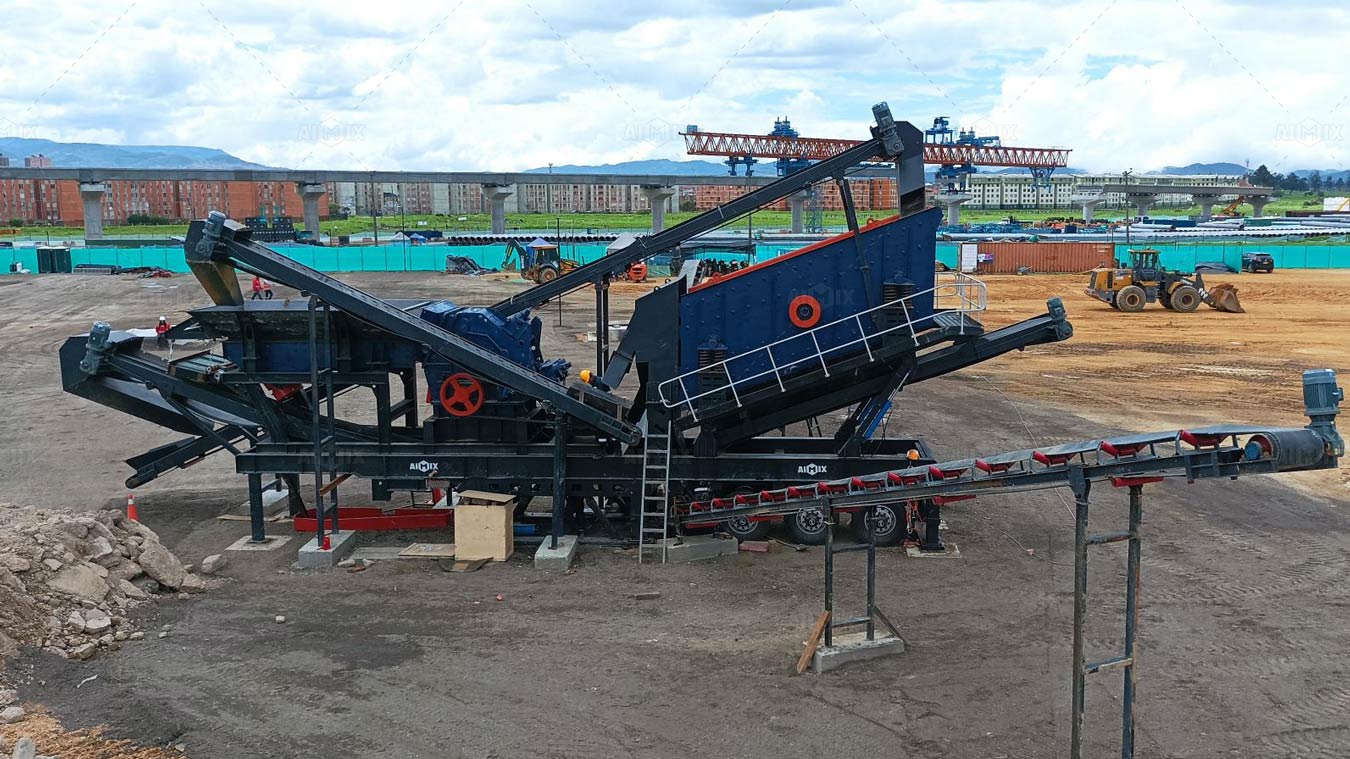
In the highly competitive aggregates and mining industry, controlling operating costs is no longer optional—it is essential. Many operators focus primarily on equipment pricing, but real profitability comes from optimizing production planning and plant operations. Whether managing a stationary stone crusher plant(plantas trituradoras de piedra) or operating a mobile stone crusher in remote areas, systematic production planning can significantly reduce the unit ton cost while improving output stability and product quality.
This article explores practical strategies that quarry owners, contractors, and plant managers can apply to enhance efficiency, extend equipment lifespan, and increase return on investment, especially for those evaluating a stone crusher plant for sale or upgrading an existing facility.
Understanding Unit Ton Cost in Crushing Operations
Unit ton cost refers to the total operating cost divided by the total output produced. This includes fuel, power consumption, labor, wear parts, maintenance, downtime, logistics, and management overhead. For a stone crusher plant, even small inefficiencies—such as unplanned shutdowns or poor material flow—can quickly raise the cost per ton.
In mobile stone crusher(trituradora de piedra móvil) applications, the challenge is even greater due to changing job sites, variable feed materials, and logistical constraints. Therefore, optimizing production planning must address both fixed and variable cost factors.
Aligning Production Planning With Market Demand
One of the most overlooked aspects of cost control is aligning production volume with actual market demand. Overproduction ties up capital in inventory and increases storage and handling costs, while underproduction results in lost sales opportunities and idle equipment.
Effective production planning begins with accurate demand forecasting. By analyzing historical sales data, seasonal trends, and project pipelines, operators can determine optimal output levels for their stone crusher plant. This ensures steady utilization without overstressing machinery or creating bottlenecks in downstream logistics.
Adjusting Output Based on Project Cycles
Infrastructure and construction projects often follow cyclical patterns. A mobile stone crusher, for example, may experience peak demand during road construction seasons and lower utilization during rainy periods. Flexible production planning allows operators to adjust output, staffing, and maintenance schedules accordingly, reducing unnecessary operating expenses.
Optimizing Equipment Utilization and Configuration
Equipment selection and configuration play a central role in determining unit ton cost. A well-matched crushing and screening setup ensures consistent throughput, reduces energy waste, and minimizes wear on critical components.
For operators evaluating a stone crusher plant for sale(venta de planta chancadora), it is essential to assess not only capacity but also adaptability. A modular plant design or mobile stone crusher configuration enables rapid adjustments to feed size, material hardness, and product specifications without costly downtime.
Balancing Throughput and Wear Costs
Running a stone crusher plant at maximum capacity may increase short-term output, but it often accelerates wear on liners, jaws, hammers, and bearings. Optimized production planning seeks a balance point where throughput is high enough to meet demand while minimizing wear-related downtime and spare parts costs.
Using performance monitoring systems to track power draw, vibration, and temperature trends allows operators to detect inefficiencies early and fine-tune operating parameters accordingly.
Integrating Maintenance Into Production Planning
Unplanned downtime is one of the largest contributors to high unit ton cost. Reactive maintenance not only disrupts production schedules but also increases labor costs and emergency spare part expenses.
Instead, preventive and predictive maintenance should be embedded directly into production planning. By scheduling maintenance during low-demand periods or shift changes, operators can reduce lost production time and extend the service life of key components in both stationary stone crusher plants and mobile stone crusher units.
Using Data to Drive Maintenance Decisions
Modern crushing plants increasingly rely on digital monitoring systems to collect operational data in real time. This data can be used to forecast component wear, optimize lubrication intervals, and plan overhauls more accurately.
For businesses considering a stone crusher plant for sale, investing in smart maintenance systems can significantly reduce long-term operating costs and improve asset reliability.
Enhancing Workforce Efficiency and Process Coordination
Human factors remain a critical determinant of production efficiency. Even the most advanced stone crusher plant will underperform without well-trained operators and coordinated workflows.
Production planning should include structured training programs, clear standard operating procedures, and performance benchmarks for operators, maintenance staff, and supervisors. Cross-training personnel to handle multiple roles improves flexibility and reduces dependency on individual workers.
Improving Communication Across Departments
Effective coordination between production, maintenance, logistics, and sales departments ensures that production plans are realistic and aligned with operational constraints. For example, scheduling higher output without confirming raw material availability or transport capacity can lead to inefficiencies and increased unit ton cost.
Integrated planning meetings and shared performance dashboards enable real-time adjustments and foster a culture of continuous improvement within the stone crusher plant operation.
Reducing Energy and Material Waste Through Process Optimization
Energy consumption is a major cost driver in crushing operations. Optimizing feed size distribution, reducing recirculation loads, and maintaining consistent material flow can significantly lower power usage per ton.
For mobile stone crusher setups, minimizing unnecessary relocation, optimizing site layout, and reducing idle time between loads can further enhance energy efficiency and reduce fuel consumption.
Material waste is another hidden cost. Poor screening efficiency, excessive fines generation, and product contamination reduce sellable output and increase handling expenses. By fine-tuning crusher settings and screening configurations, operators can improve yield and reduce waste-related losses.
Strategic Investment and Long-Term Cost Control
Optimizing production planning is not only about short-term cost reduction—it is also about long-term competitiveness. When evaluating a stone crusher plant for sale, buyers should assess lifecycle costs rather than focusing solely on purchase price.
Investments in automation, modular plant design, energy-efficient motors, and intelligent control systems may require higher upfront capital, but they often result in lower unit ton cost over the plant’s operational life.
Ultimately, the most successful stone crusher plant operators adopt a holistic approach that integrates production planning, maintenance strategy, workforce development, and process optimization into a unified management framework.
Moving From Reactive Operations to Strategic Management
Reducing unit ton cost is not achieved through isolated actions but through a structured, data-driven production planning system. Whether operating a stationary stone crusher plant or deploying a mobile stone crusher for infrastructure projects, disciplined planning transforms operational complexity into a competitive advantage.
By aligning production with market demand, optimizing equipment utilization, embedding maintenance into operations, and investing strategically, crushing plant operators can achieve sustainable cost control while delivering consistent product quality and operational reliability.

Comments
No comments yet. Be the first to react!