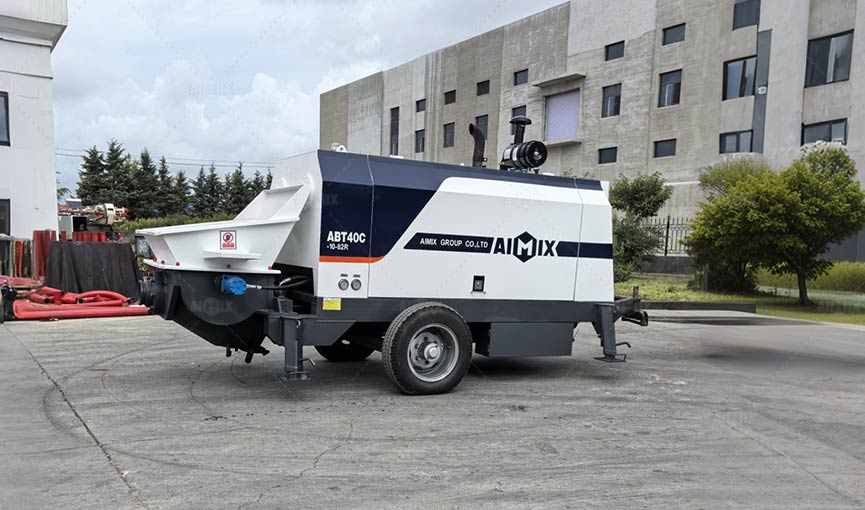
Concrete transportation is one of the most overlooked factors affecting mining construction efficiency in Peru. Many mining projects are located in remote mountainous regions, where steep terrain, narrow access roads, long distances, and unpredictable weather conditions create serious obstacles for traditional concrete delivery methods. Even when a reliable concrete supply is available, moving fresh concrete from the mixing area to the final placement point can become a complex logistical challenge. Line pump technology provides a practical solution by changing how concrete is transferred on challenging mining sites. Instead of depending entirely on truck access or large concrete boom pumps, concrete can be delivered through flexible pipelines that reach difficult areas with greater adaptability. This technology helps mining contractors improve construction continuity, reduce transportation delays, and maintain better control over concrete placement in demanding environments.
Understanding Concrete Transportation Challenges in Peru Mining Projects
Remote Locations and Difficult Site Conditions
Mining projects in Peru are often developed in high-altitude areas of the Andes, where construction conditions are significantly different from urban projects. Limited road infrastructure, sharp slopes, and restricted working spaces can make concrete transportation extremely difficult. Ready-mix trucks require relatively stable and accessible routes to operate efficiently. However, many mining construction sites include temporary roads, underground access points, processing facilities, and infrastructure areas located far away from the main mixing station. When trucks cannot reach the exact pouring location, additional handling steps are required, increasing labor costs and reducing productivity. In these situations, the challenge is not only transporting concrete but also maintaining its quality during movement. Fresh concrete has a limited working time. Excessive delays may affect slump retention, workability, and final structural performance.

Limitations of Traditional Concrete Delivery Methods
Traditional concrete transportation methods have several limitations in mining environments. Concrete trucks are effective for open construction sites, but their performance decreases when projects involve restricted access or complex terrain. For example, a concrete truck may deliver material to the nearest accessible point, but workers still need to transfer concrete manually using wheelbarrows, buckets, or other equipment. This secondary transportation process creates additional risks, including material segregation, inconsistent placement speed, and increased manpower requirements. Large boom pumps can solve some access problems, but they also require sufficient setup space. In mountainous mining areas, finding a stable platform for a boom pump can be difficult. The equipment transportation cost may also increase significantly when moving large machinery between remote locations.
How Line Pump Technology Improves Concrete Transportation Efficiency
Flexible Concrete Delivery to Hard-to-Reach Areas
A concrete line pump uses a connected pipeline system to transport concrete from the pump location to the pouring point. Unlike conventional delivery methods, it does not require the entire machine to approach the final construction area. This flexibility is particularly valuable in Peru mining projects, where construction zones may be separated by elevation differences, tunnels, or limited access routes. The pipeline can be arranged horizontally, vertically, or through narrow passages according to site requirements. For underground mining construction, foundation works, retaining structures, and infrastructure development, line pumps provide a more adaptable concrete placement method. Contractors can position the pump in a suitable area and extend the delivery pipeline to where concrete is needed.
Reducing Transportation Time and Improving Construction Continuity
Mining projects usually operate under strict schedules. Any delay in concrete supply can interrupt multiple construction activities, including equipment foundations, support structures, drainage systems, and processing facilities. Line pump technology creates a more continuous concrete transportation process. Once the pipeline system is installed, concrete can be delivered steadily without repeated truck movements or frequent repositioning of equipment. This continuous operation reduces waiting periods between concrete batches. It also allows workers to focus on placement and finishing rather than spending time managing material transfer. For large-scale mining projects, these small improvements accumulate into significant productivity gains. A smoother concrete supply chain can help contractors maintain project timelines while reducing unnecessary operational interruptions.
Lower Equipment Requirements and Site Preparation Costs
One important advantage of line pumps is their compact operational footprint. Compared with large concrete pumping equipment, line pumps generally require less space for installation and operation. This characteristic is useful for mining sites where available working areas are limited. Contractors do not need to prepare large platforms or wide access zones for equipment positioning. In addition, easier transportation means lower mobilization complexity. Moving a compact pumping system between different construction areas is usually more convenient, especially when multiple structures are being built across a mining site.
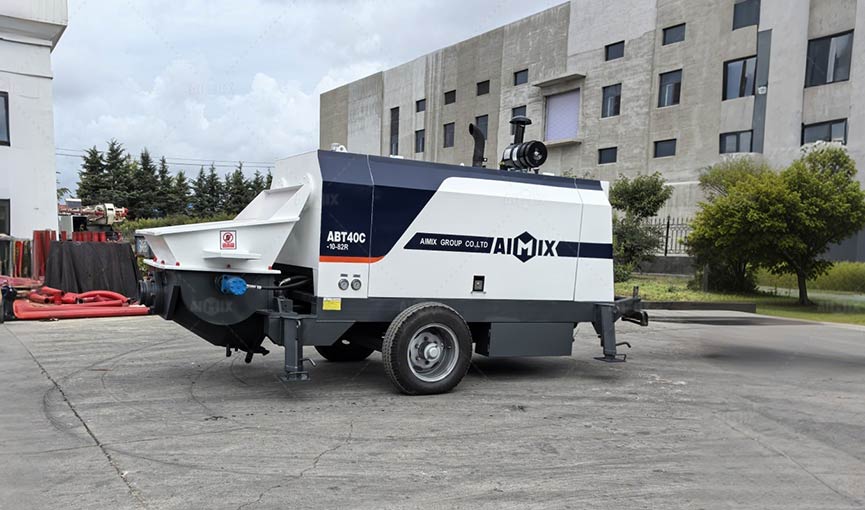
Choosing the Right Line Pump Solution for Mining Applications
Consider Concrete Type and Pumping Distance
Selecting a suitable line pump requires careful consideration of project conditions. Concrete characteristics, pipeline length, vertical elevation, and required output capacity all influence pumping performance. Mining projects may use different concrete mixtures depending on structural requirements. Some applications require high-strength concrete, while others may involve shotcrete, foundations, or supporting structures. The pumping system must be compatible with concrete consistency to avoid blockages and maintain stable flow. Long-distance pumping requires proper pipeline configuration. Factors such as pipe diameter, pressure capacity, and installation layout should be evaluated before operation begins.
Match Pump Technology with Site Conditions
Every mining project has unique construction challenges. A suitable line pump solution should be selected based on the actual environment rather than only equipment specifications. For open mining infrastructure projects, a mobile concrete pump in Peru can provide flexibility between different work areas. For underground construction, a compact pumping system with adaptable pipelines may offer better accessibility. The best solution balances pumping performance, transportation convenience, maintenance requirements, and long-term operating efficiency.
Building More Efficient Mining Construction with Advanced Concrete Pumping
Peru’s mining industry continues to develop projects in increasingly challenging environments. As construction sites move deeper into remote regions, efficient concrete transportation becomes a critical factor in project success. Line pump technology provides a practical approach to overcoming terrain limitations, improving concrete delivery reliability, and reducing unnecessary transportation processes. By allowing concrete to reach areas that traditional equipment cannot easily access, line pumps help contractors create a more streamlined construction workflow. For mining companies seeking higher efficiency and better adaptability, integrating advanced concrete pumping solutions into project planning can become an important step toward safer, faster, and more cost-effective construction operations.

Comments
No comments yet. Be the first to react!